
Having experienced quality dot matrix printers and observed when inkjets arrived on the scene with their outpourings of bodily fluids into the printer chassis. It took quite a while before I could justify to myself the purchase of an Inkjet for personal and business use.It was in the 1990’s when inkjets started to take off and at that time, there were two parallel technologies vying for top spot. Both worked towards the same end process of shooting/spitting a measured droplet of ink onto the paper. HP originally fired the ink onto the paper by heating the ink in a tiny chamber until it boiled at which point the ink expansion would fire a droplet through a tiny nozzle onto the paper. Epson went a different route and picked a technology incorporating a piezo crystal into the rear of the ink nozzle. Apply an electric current, the crystal bucks and ink is pushed out of the nozzle.
Inkjets have had a relatively short life and through my eyes they started badly. Not necessarily all the problems were the fault of the inkjet but most were down to a new technology waiting to mature. When they first arrived they had the resolution of a 9 pin dot matrix but at the time the inks were cheap. Companies hadn’t realised that was where the profit was. Of course we all thought it was so brilliantly quiet but the biggest negative was paper. No such thing as coated paper back then so all your prints looked like a row fr squashed spiders in formation.
So things have improved a lot now in the paper department but you still have to be careful on what you pick for your printer. This is partly down to the different inks available. Just like the two methods of spitting ink onto the paper, inks also went down two routes. Pigment based or dye based. HP went with Dye and Epson went with Pigment. So why should this affect paper. Well I can tell you from experience that glossy HP paper in an Epson printer using Pigment ink doesn’t really dry. Lets just say you could smudge it a day later. However Epson paper in a HP or Canon inkjet is fine. In fact my preferred paper for printing pictures is Epson Satin finish paper.
Of course we all know the issues with tri-colour ink cartridges and it was only when consumer inkjets started to offer separate colour ink carts that I took the plunge and purchased an Epson Stylus C82.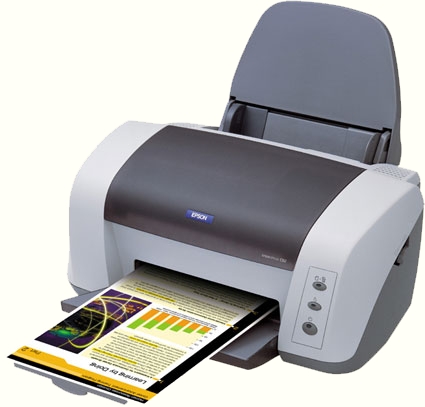
For a 3 colour printer, it did surprisingly good pictures so long as you used Epson paper. Being a Pigment ink the colour depth and stayfast were excellent but nozzle blockages were quite common. I should say that I have and still only use OEM inks in all my printers.
Maybe it was the pigment based ink or the fact that the nozzles are permanent fixtures but after a year it was becoming a pain. What I finally found was the vacuum tube to suck the ink through the nozzles when cleaning them had come lose. However I had had enough and switched to Canon Pixma 3000.
Oh what a joy the Canon Pixma is. Along with individual colours, you get photo black and a high capacity black for text printing. Better yet the carts were transparent so you always knew how much ink you had. More on ink capacity later. Print quality was brilliant and it would print well on all paper I threw at it and Epson paper was a great marriage. I should mention that the ink nozzles are installed as a separate print head module and can be replaced as a separate purchase should you damage it. In the long reign of this printer I never experienced a blockage ever. Never had to force a nozzle clean. Just power on and print.
So why after such perfect printing did I change it for a HP at the end of 2011? That will be explained in a future post…